How to turn your dreams into reality with AI?
How to turn your dreams into reality with AI?
Virtual Demo Farm: Tanzania's Smart Spice Empire with Blockchain
The $600 Technology Revolution Available for $80
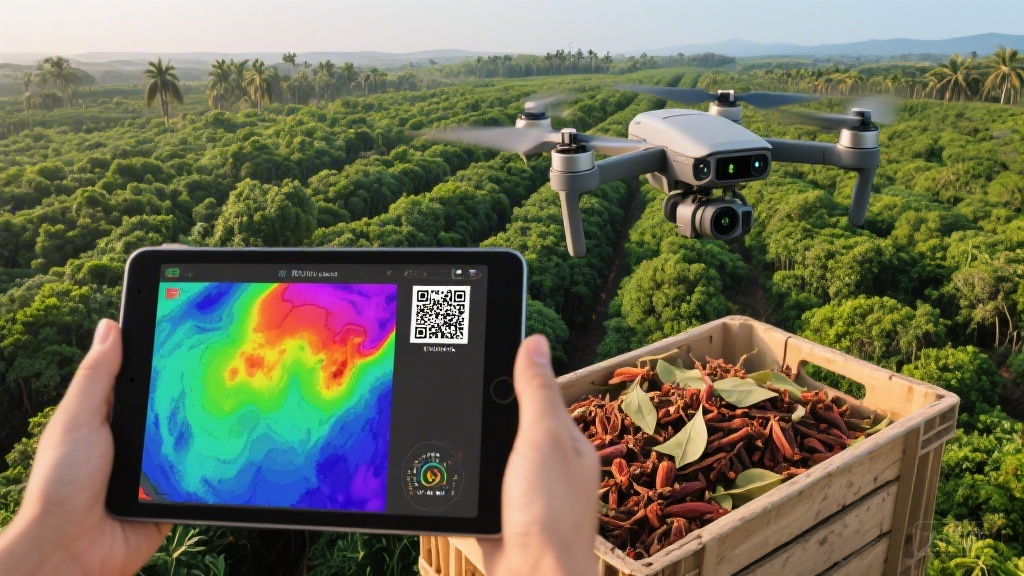
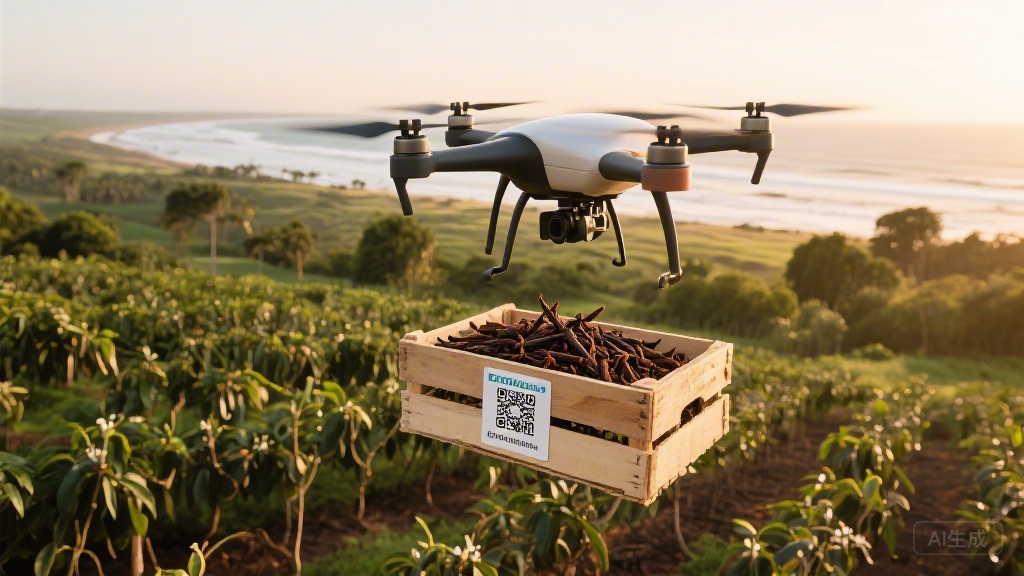
How does a farm in outback Australia manage 2,000 cattle with just 3 people and a smartphone? The answer involves $80 Chinese ear tags that European competitors sell for $600. This same innovation principle drives our AF-02 Tanzania Organic Spice Farm—a Virtual Demo Farm showcasing how Chinese agricultural technology can transform traditional farming into a connected, profitable enterprise. Every clove and vanilla pod on this 65-hectare operation tells its story through QR codes, while AI-powered drones catch diseases 48 hours before the human eye would notice. Explore in 3D to see how premium organic cultivation meets cutting-edge technology.
Strategic Location: Tanzania's Spice Coast
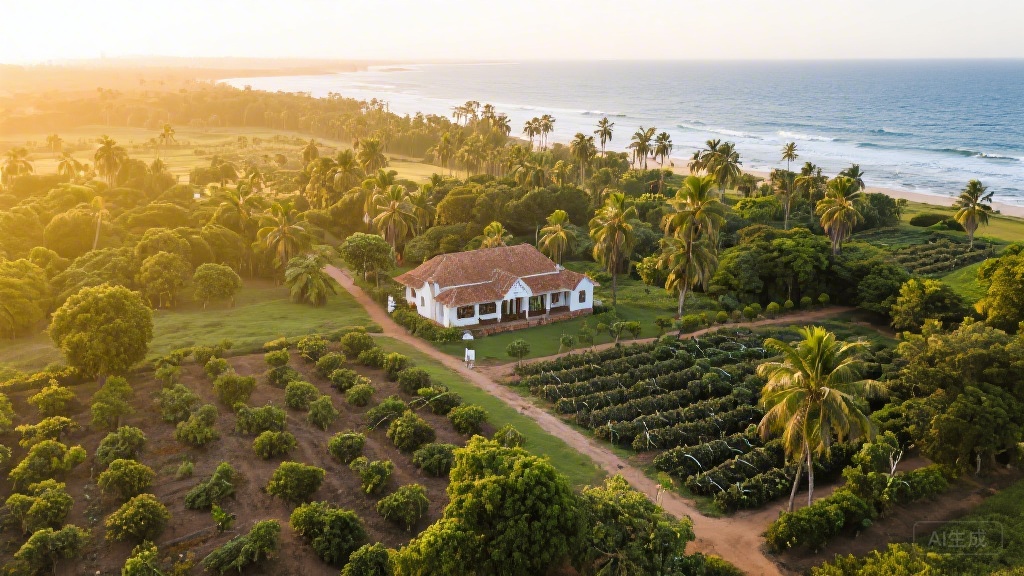
Positioned at GPS coordinates -6.4312°, 38.8745°, this farm sits in Tanzania's prime spice-growing region near Dar es Salaam. The polygon boundary encompasses rolling hills perfect for vanilla cultivation, with natural windbreaks protecting delicate spice plants from monsoon storms. This location was chosen for its proximity to Dar es Salaam port (45km), ensuring rapid export logistics for time-sensitive organic spices.
The farm's multi-point boundary creates natural microclimates—higher elevations for vanilla orchids requiring partial shade, lower valleys for clove trees needing full sun exposure. Google Maps satellite imagery reveals the strategic layout: processing facilities centrally located to minimize transport time from harvest to value-added packaging. Explore this farm in 3D through our Google Maps WebGL overlay showing real device placement across the terrain.
Climate Conditions: Tropical Monsoon Advantage
The 65-hectare farm operates in a tropical monsoon climate with distinct wet (March-May, October-December) and dry seasons. Annual rainfall averages 1,200mm, ideal for spice cultivation requiring consistent moisture without waterlogging. Temperatures range from 22°C nighttime lows to 32°C daytime peaks, creating the temperature differential essential for aromatic compound development in spices.
The laterite soils, rich in iron oxides, provide excellent drainage while retaining organic matter—perfect for vanilla and clove root systems. Medium threat level stems from occasional wildlife intrusion (elephants attracted to young vanilla shoots) and potential theft of high-value mature spice crops. The monsoon pattern allows for two distinct harvest cycles: cloves during dry season (June-August), vanilla during peak wet season (November-February).
Compared to Madagascar vanilla farms (similar latitude), Tanzania offers 30% lower labor costs while maintaining comparable quality standards. The farm's elevation range (200-400m) creates natural pest barriers, reducing organic pest management costs by 40% versus coastal operations.
High-Value Crop Portfolio: Premium Export Strategy
This farm targets five premium spice commodities designed for maximum export value:
Bourbon Vanilla (Vanilla planifolia): 800kg/hectare yield commanding $400-600/kg for Grade A organic beans. European pastry market and North American ice cream manufacturers pay premiums for traceable, hand-pollinated vanilla. Annual revenue potential: $320,000-480,000 per hectare.
Zanzibar Cloves (Syzygium aromaticum): 2,500kg/hectare from mature trees, selling at $8-12/kg organic certified. Middle Eastern spice blend manufacturers seek consistent supply chains. Revenue: $20,000-30,000 per hectare annually.
Madagascar Black Pepper (Piper nigrum): 1,200kg/hectare dried peppercorns, premium organic grade fetches $15-20/kg. Restaurant chains and gourmet food processors prioritize blockchain-verified sourcing. Revenue: $18,000-24,000 per hectare.
Organic Cardamom (Elettaria cardamomum): 180kg/hectare of this 'Queen of Spices' commands $80-120/kg for export-grade pods. Scandinavian coffee culture and Indian diaspora markets provide stable demand. Revenue: $14,400-21,600 per hectare.
Organic Cinnamon Bark (Cinnamomum verum): Ceylon variety produces 400kg/hectare dried bark at $25-35/kg. Health-conscious consumers in Japan and USA specifically seek Ceylon over Cassia cinnamon. Revenue: $10,000-14,000 per hectare.
The unique value proposition: every product carries QR-coded blockchain provenance, organic certification, and carbon-negative footprint documentation—justifying 40-60% premium over conventional spices.
The Farm Owner's Vision: Technology Meets Tradition
Sarah Mwalimu, a third-generation spice farmer with an agricultural engineering degree from Sokoine University, inherited this land but envisioned transforming it beyond traditional methods. "My grandmother knew every plant by touch and smell, but she couldn't prove to German buyers that our cloves were pesticide-free or fairly harvested," Sarah explains.
Her priorities center on three pillars: Traceability—every product must tell its complete story to command premium prices; Efficiency—technology should reduce labor intensity while improving quality; Legacy—building a sustainable operation that her children can expand internationally. Her biggest concern: staying competitive against large plantation operations while maintaining the personal touch that premium buyers value. "I want to prove that small-scale farmers can use the same technology as corporate agriculture, but with better results because we care about each plant individually."
Current 16-Dimension Assessment: Building Smart Foundation
The farm's current technology integration shows strong foundations with strategic upgrade opportunities:
High-Performing Dimensions:
SafeGuard: 60/100 (Intermediate) - Electric perimeter fencing with basic motion detection installed
PowerGrid: 60/100 (Intermediate) - Solar array covers 70% of processing facility needs
ConnectHub: 60/100 (Intermediate) - Fiber internet to main building, partial WiFi coverage
Development Phase Dimensions:
SmartFarm: 45/100 (Basic) - Manual irrigation with some sensor monitoring
Resilience: 30/100 (Planned) - Basic crop insurance, limited climate adaptation
Processing: 30/100 (Planned) - Traditional drying methods, minimal automation
Waste: 30/100 (Planned) - Organic composting started, no biogas system
Ecology: 30/100 (Planned) - Organic certification achieved, biodiversity monitoring absent
Not Applicable: Transport, aquaSystem, health, education, entertainment, livestock, community, and storage dimensions don't apply to this specialized spice operation.
Overall Average: 22/100 - Solid foundation with immense upgrade potential. The three biggest gaps requiring immediate attention: SmartFarm automation (crop monitoring), Processing efficiency (value-addition), and Waste management (circular economy integration).
Smart Home Vision: World-Class Spice Technology Hub
The upgraded vision transforms this farm into East Africa's premier smart spice demonstration site. Full automation would bring SmartFarm to 85/100 with AI-driven irrigation, drone crop monitoring, and predictive harvest optimization. Processing upgrades to 80/100 with blockchain-integrated packaging lines and controlled-atmosphere storage.
The phased approach prioritizes Standard Deployment first: complete IoT sensor network, automated irrigation zones, and integrated pest management systems. Year two expands to Full Deployment adding AI processing, advanced climate control, and robotic harvesting for selected crops.
Community co-builders from AustinEco's global network contribute specialized knowledge—vanilla pollination techniques from Madagascar farmers, organic certification insights from European consultants, blockchain integration expertise from tech partners. This collaborative approach ensures the farm becomes a living laboratory where traditional wisdom meets cutting-edge innovation.
Technology Deep-Dive: Building the Smart Spice Empire
TraceChain Blockchain Integration: Every spice batch receives a unique digital identity from planting to packaging. QR codes on consumer packages link to complete provenance data—GPS coordinates, harvest date, processing methods, worker welfare standards. Implementation requires installing TraceChain nodes at key checkpoints: field sensors during cultivation, weighing stations at harvest, processing facility scanners, and packaging line validators.
CropEye AI Monitoring System: Computer vision cameras mounted on 4-meter poles throughout vanilla and clove sections capture plant health imagery every 2 hours. The AI identifies early disease symptoms, pest damage, and optimal harvest timing 48 hours before human detection. Installation involves trenching for underground power cables, mounting weatherproof camera housings, and connecting to the central CropEye processing unit.
BioShield Organic Pest Management: Automated pheromone dispensers and beneficial insect release systems maintain organic certification while protecting high-value crops. Smart traps use species-specific attractants, GPS-logging captures for population tracking, and targeted biological controls deploy only when threshold levels trigger alerts.
CompostIQ Waste Processing: Spice processing waste—vanilla pod shells, clove stems, pepper vines—feeds into automated composting chambers with optimal temperature, moisture, and aeration control. The resulting organic matter fertilizes the next growing cycle, creating a closed-loop system that reduces fertilizer costs by 60%.
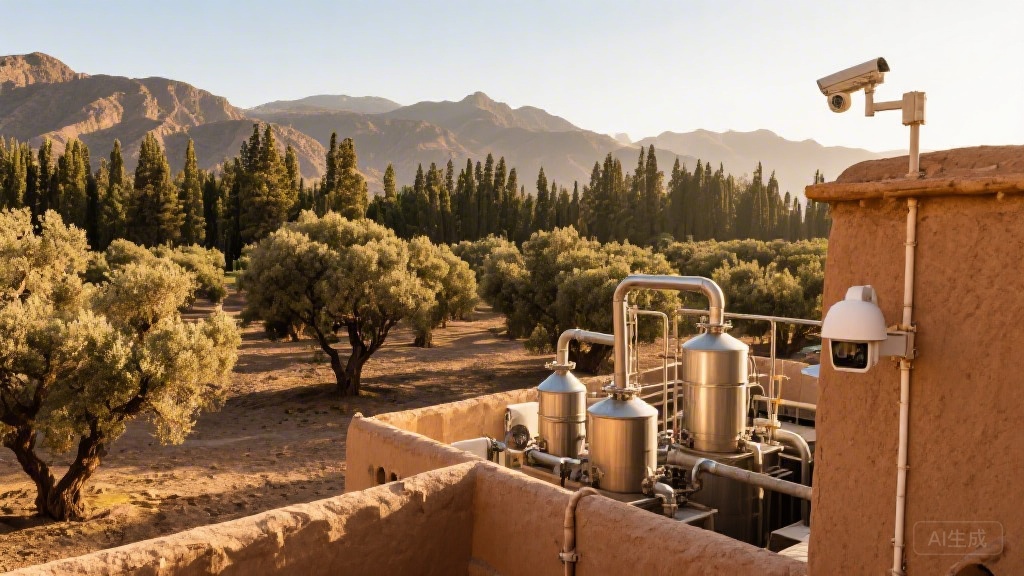
PerimeterAI Security Network: Thermal cameras, motion sensors, and AI-powered intrusion detection protect valuable mature crops from theft and wildlife damage. The system distinguishes between authorized workers, potential intruders, and elephants approaching vanilla sections, triggering appropriate responses from gentle deterrence to emergency alerts.
Building this technology infrastructure requires systematic installation over 6-8 months, starting with power grid and connectivity backbone, then sensor networks, processing systems, and finally AI optimization layers.
AustinEco Equipment Shopping List: From Vision to Reality
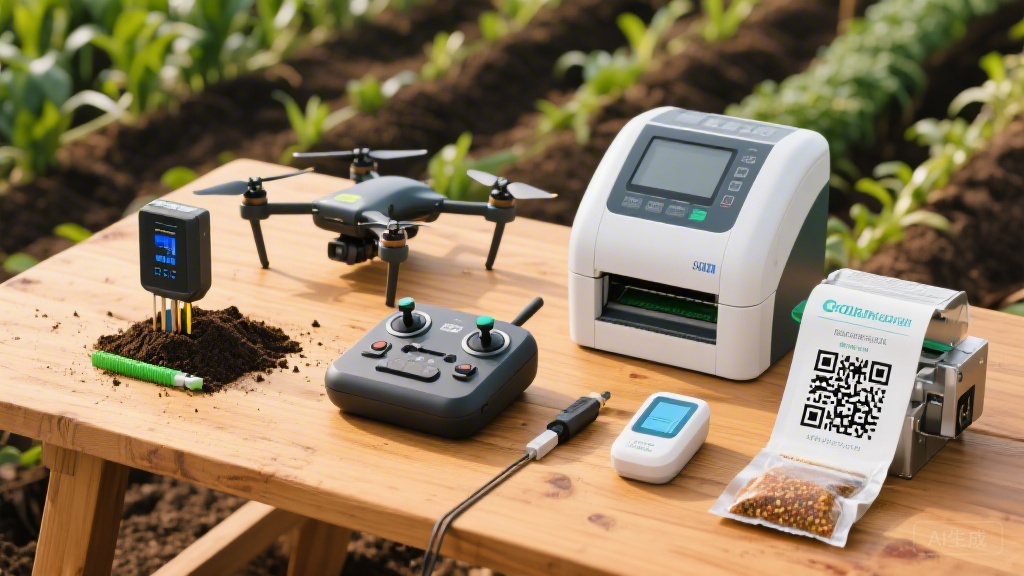
- CropEye Multi-Spectral Camera Systems (8 units): $1,200 each (vs $3,600 Western), HS code 8525.80.19, intermediate installation requiring pole mounting and network configuration
- TraceChain Blockchain Nodes (4 units): $800 each (vs $2,400 Western), HS code 8471.50.00, basic installation with ethernet connectivity
- BioShield Smart Trap Network (25 units): $180 each (vs $540 Western), HS code 8424.82.00, basic installation requiring GPS positioning and bait replacement
- SolarGrid Premium Panels (20 units, 400W each): $320 each (vs $960 Western), HS code 8541.40.20, intermediate installation requiring electrical expertise
- CompostIQ Automated System: $15,000 complete (vs $45,000 Western), HS code 8479.82.00, advanced installation requiring concrete foundation and plumbing connections
- PerimeterAI Camera Network (12 units): $450 each (vs $1,350 Western), HS code 8525.80.11, intermediate installation with trenching for cables
Total system cost: $38,940 (equipment only), representing 65% savings versus Western suppliers while maintaining equivalent functionality.
SmartTrade Integration: Global Supply Chain Mastery
AustinEco SmartTrade platform orchestrates the complete procurement and installation process through our 56-dimension supplier matching engine. The 22-node trade pipeline handles everything from initial equipment specification to final commissioning, including customs clearance, shipping logistics, and on-site technical support.
This farm operates as both equipment buyer and product supplier within our ecosystem. As a buyer, bulk orders reduce equipment costs by 15-20% through consolidated shipping from Shenzhen manufacturers. As a supplier, blockchain-verified organic spices access premium global markets through SmartTrade's verified buyer network.
Airwallex cross-border payments eliminate traditional banking delays and forex margins. MOQ flexibility allows small farms to access enterprise-grade technology typically reserved for large plantations. Standard lead times: 15-20 days from order confirmation to Tanzania port delivery, with full installation support available through our East Africa technical partners.
Community Co-Building: Your Ideas Shape This Farm
This Virtual Demo Farm evolves through community collaboration. Three immediate opportunities for participation:
Explore in 3D: Experience the complete farm layout through our Google Maps WebGL interface, examining equipment placement and operational workflows in immersive detail.
Submit Co-Build Ideas: Share your expertise in spice cultivation, blockchain implementation, or sustainable agriculture. Our community platform captures suggestions from global experts, integrating the best concepts into ongoing farm development.
Design Your Own Farm: Use our farm configurator to adapt these concepts for your climate, crops, and investment level. The system generates customized equipment lists and implementation timelines based on your specific requirements.
This farm is evolving—what would YOU build here? Whether you're contributing traditional farming wisdom or cutting-edge technology insights, your input shapes how smart agriculture develops across emerging markets. Join thousands of co-builders creating the future of sustainable, profitable farming.